
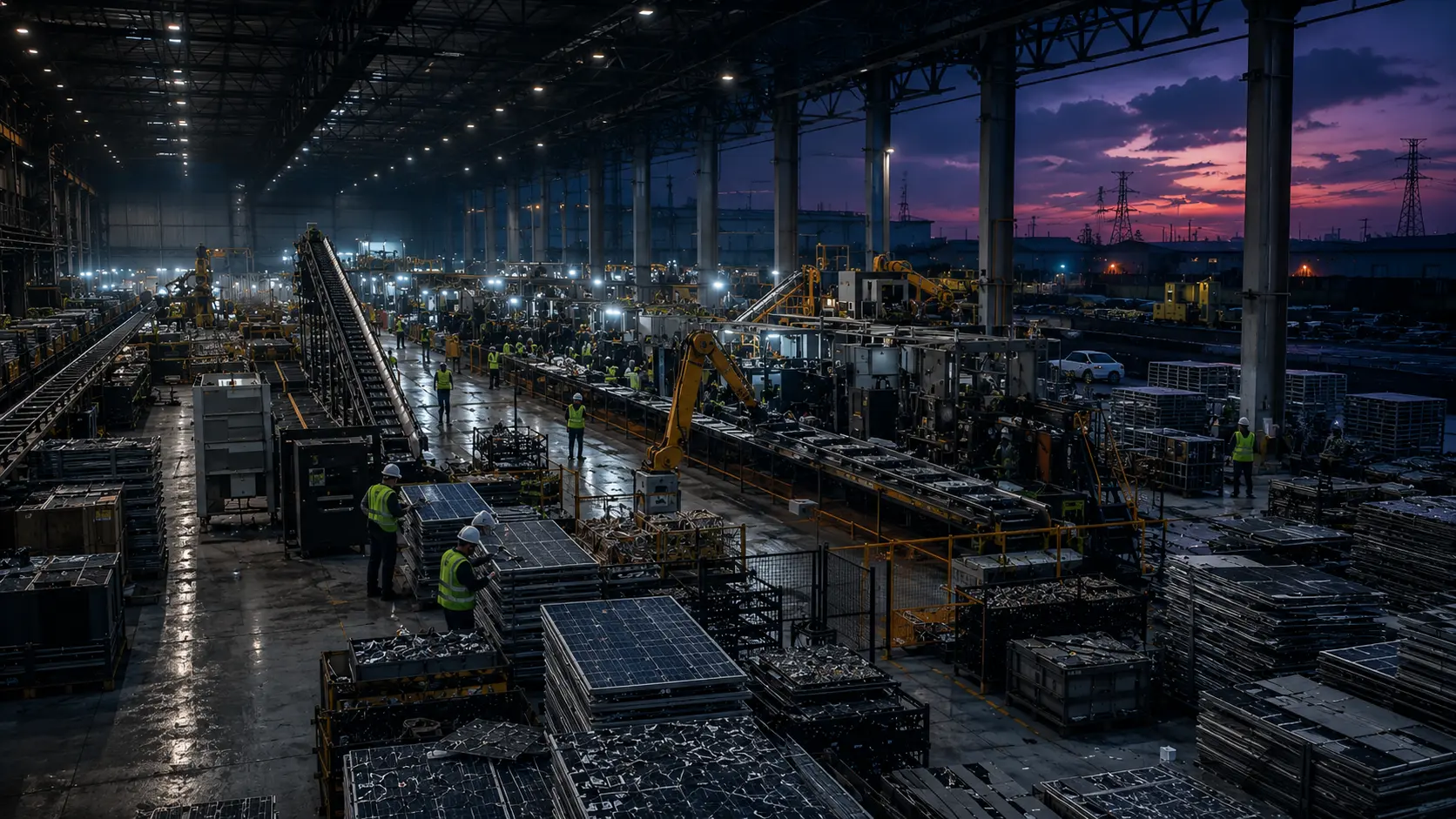
As Nigeria’s distributed solar market continues to expand, long-term infrastructure sustainability will increasingly depend not only on energy deployment itself, but also on the development of:
Over time, the economics of distributed energy financing will be materially strengthened by the ability to:
This transforms solar recycling and local assembly from merely environmental considerations into: strategic infrastructure-finance components.
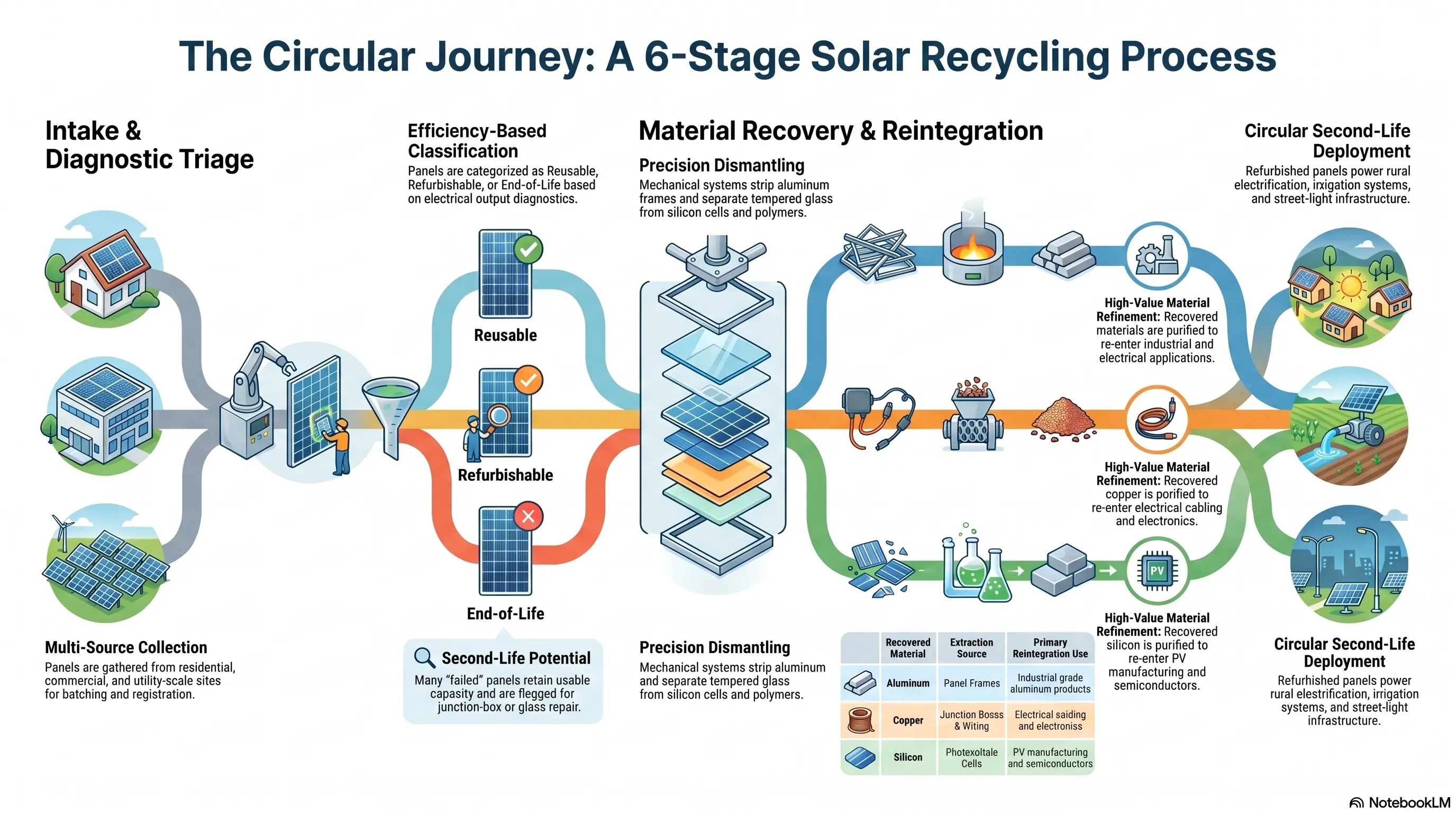
Contrary to common assumptions, a significant portion of modern solar infrastructure is either:
Across a standard residential solar deployment, recoverable materials exist within:
A standard solar panel typically contains:
The most economically recoverable components include:
Even partially degraded solar panels often retain: 50–80% of original generating capacity.
As a result, many “end-of-life” panels can still be:
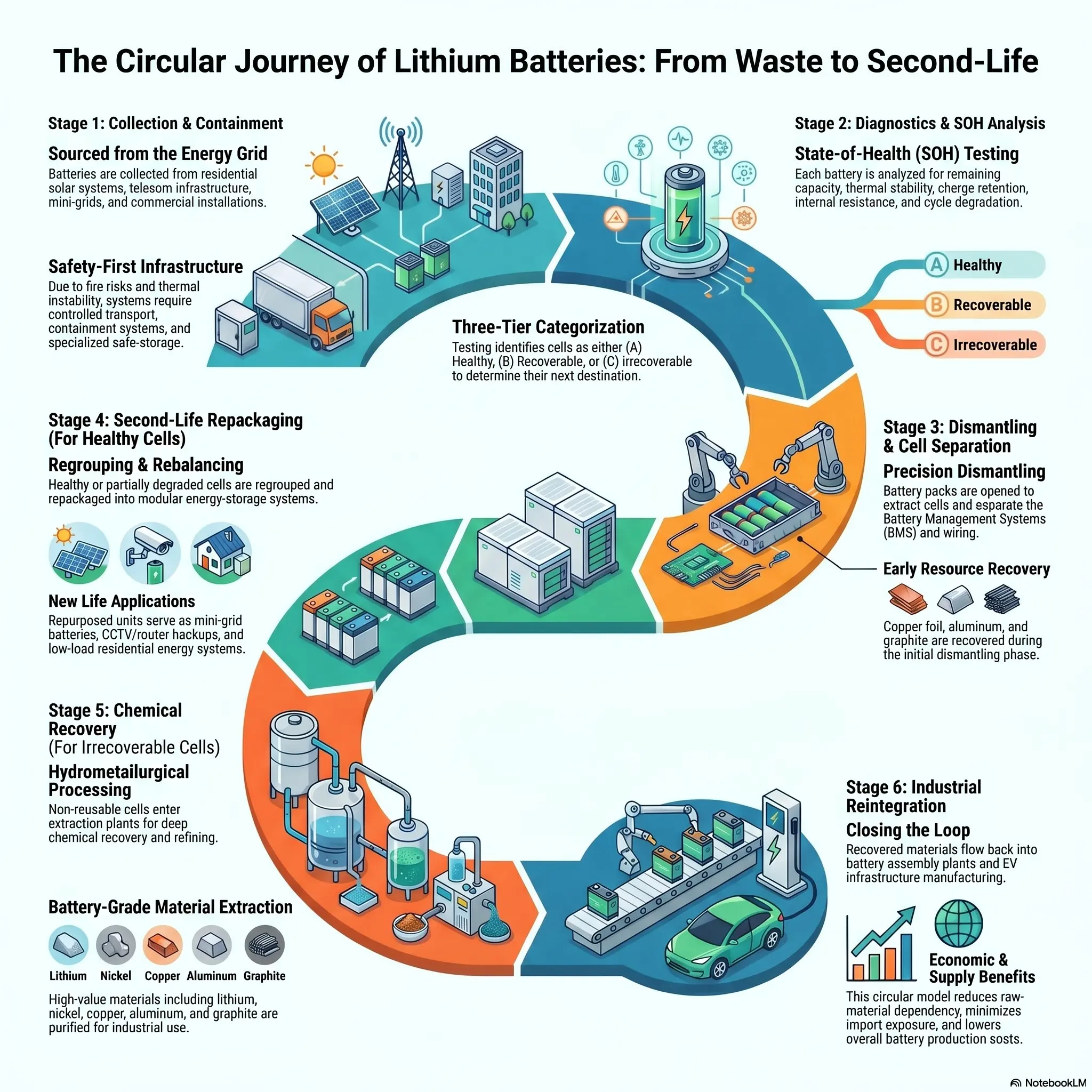
Modern LiFePO4 and lithium-ion battery systems contain:
In many failed battery systems:
This creates substantial opportunity for:
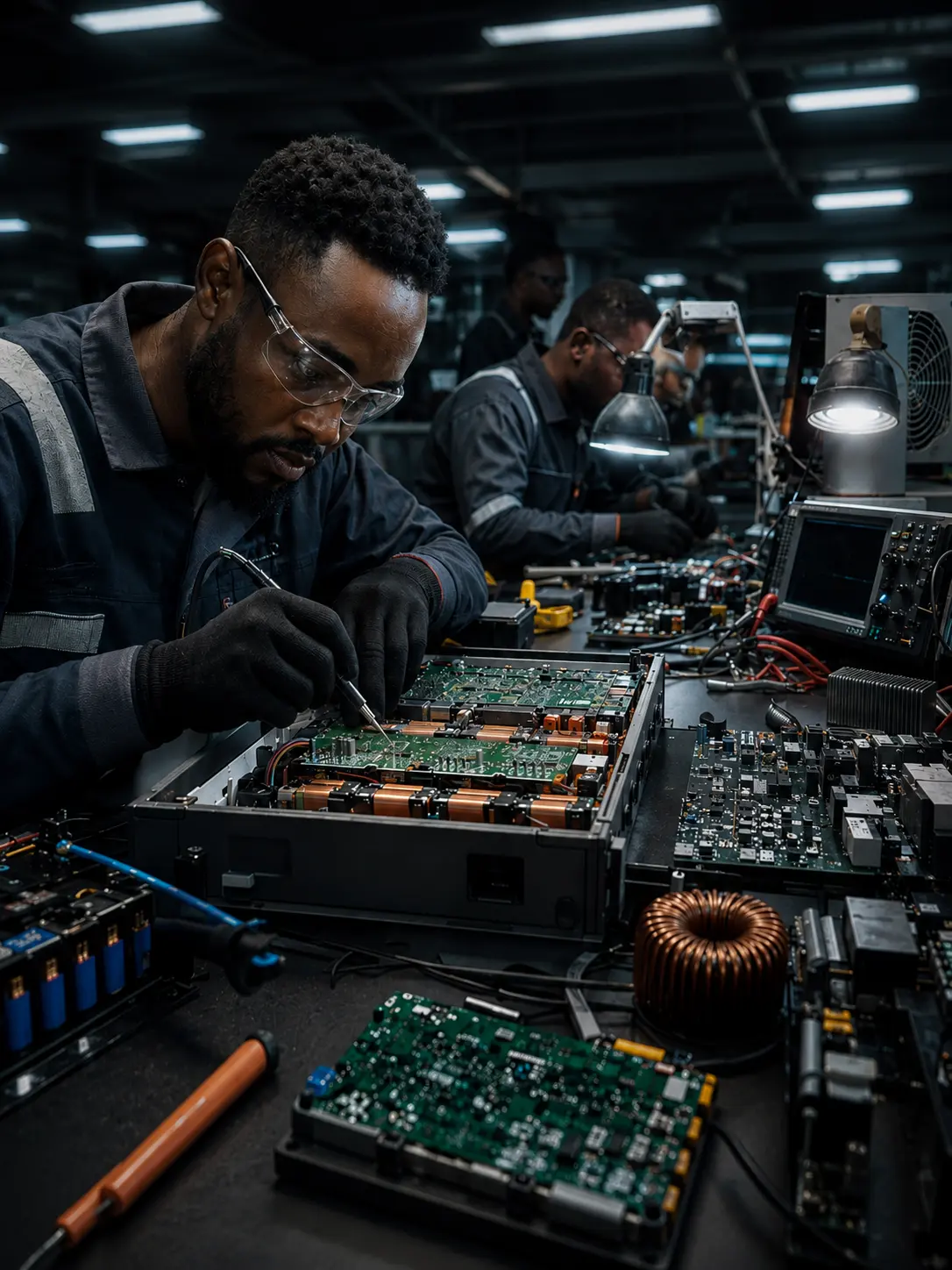
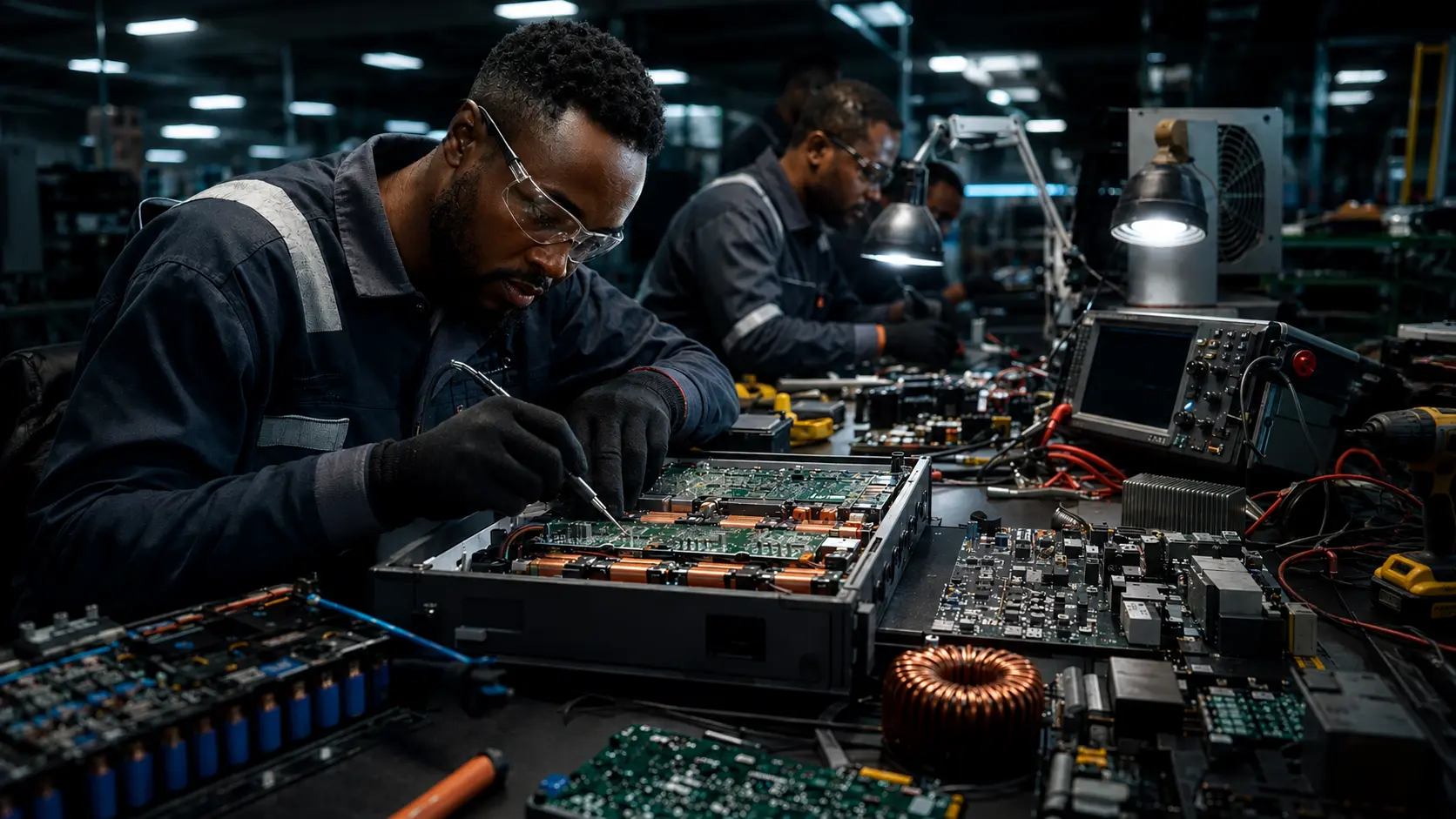
Hybrid inverters contain:
Many failed inverters are not structurally damaged, but instead suffer from:
This makes inverter refurbishment highly viable.
Importantly, Nigeria already possesses strong informal technical repair ecosystems across: Lagos, Onitsha, Aba, Kano, and other commercial hubs.
These existing capabilities can evolve into structured solar-electronics refurbishment industries.
Even under current infrastructure limitations, a surprisingly large percentage of “spoilt” solar infrastructure in Nigeria remains economically recoverable.
Industry-aligned estimates suggest that total recoverable material and economic value across solar-system components can exceed: 75–90%
when:
However, due to limited formal recycling infrastructure, Nigeria is currently estimated to capture only: approximately 20–40% of total recoverable value.
This represents:
Nigeria’s solar adoption curve is accelerating rapidly, as distributed solar deployment expands across:
the country will inevitably experience rising volumes of:
Without structured intervention, this could evolve into, a major future e-waste challenge.
However, under the right industrial framework, the same challenge becomes: a multi-billion-naira circular-energy opportunity.
For a large-scale distributed energy-financing platform, recycling and local assembly provide several strategic advantages:
| Strategic Benefit | Impact |
|---|---|
| Lower hardware replacement cost | Improves long-term margins |
| Refurbished secondary-market systems | Expands low-income accessibility |
| Second-life batteries | Reduces storage acquisition cost |
| Local assembly | Reduces FX exposure |
| Component harvesting | Improves asset recovery value |
| Domestic processing capacity | Retains economic value locally |
| Recycling ecosystems | Creates new revenue layers |
| Supply-chain optimization | Improves deployment scalability |
Over time, these efficiencies materially improve:
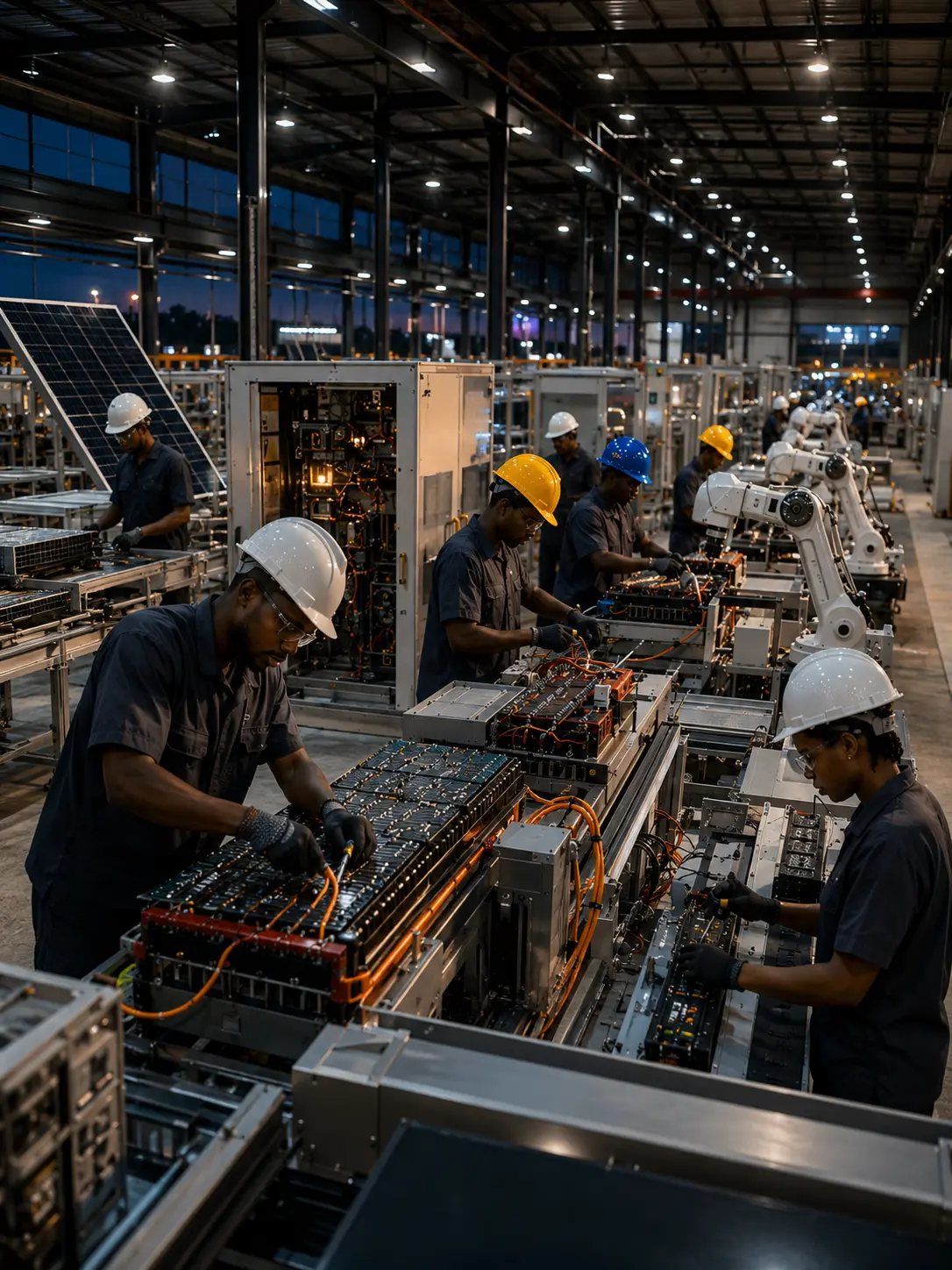
Beyond recycling, localized assembly infrastructure becomes increasingly important as deployment scales nationally.
Heavy dependence on imported:
creates:
Local assembly ecosystems can progressively reduce:
Potential long-term assembly opportunities include:
As deployment volume increases nationally, localized assembly can materially improve:
The long-term opportunity is not merely, deploying solar systems.
The larger opportunity is building: a VERTICALLY INTEGRATED DISTRIBUTED ENERGY ECOSYSTEM.
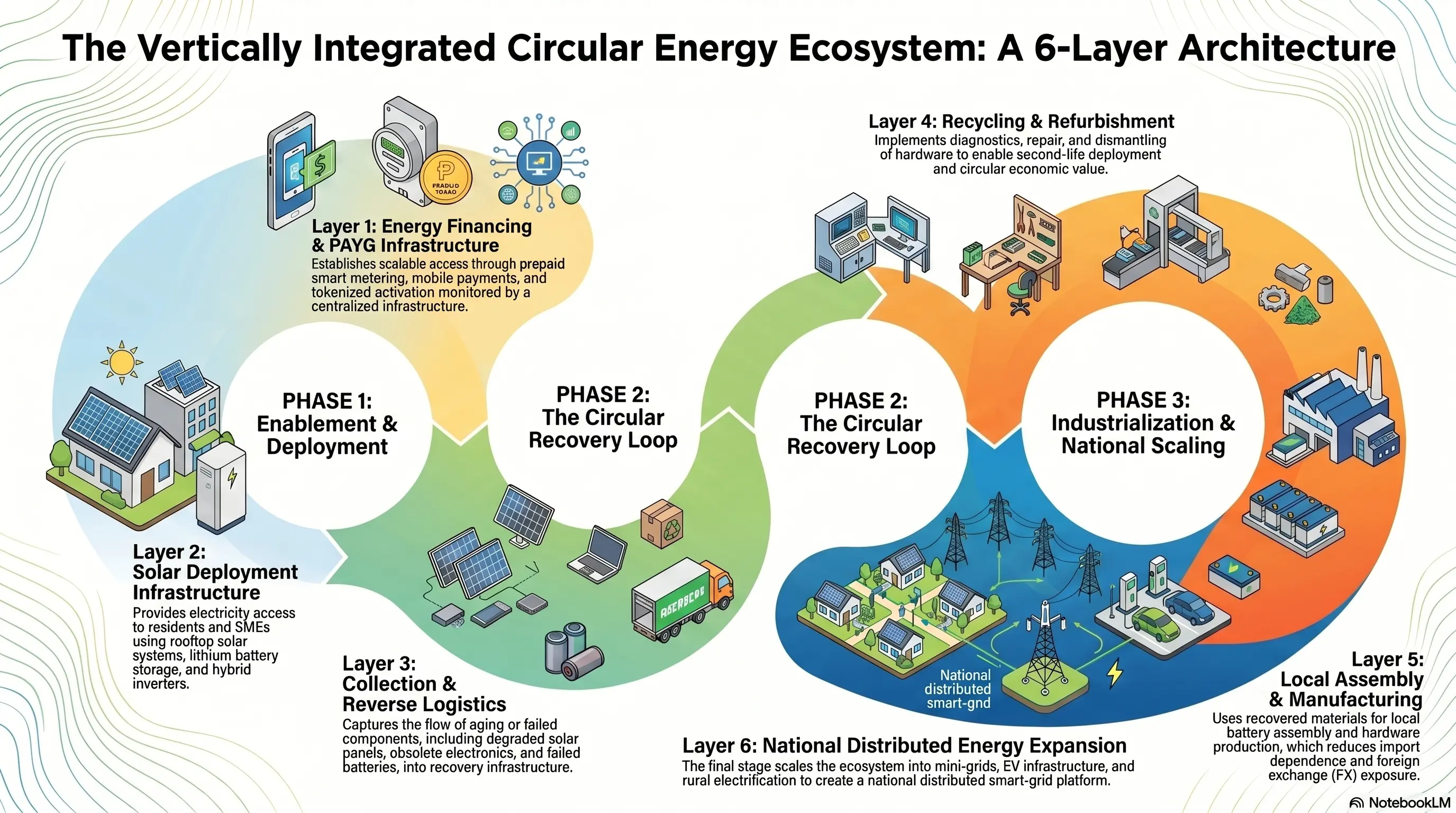
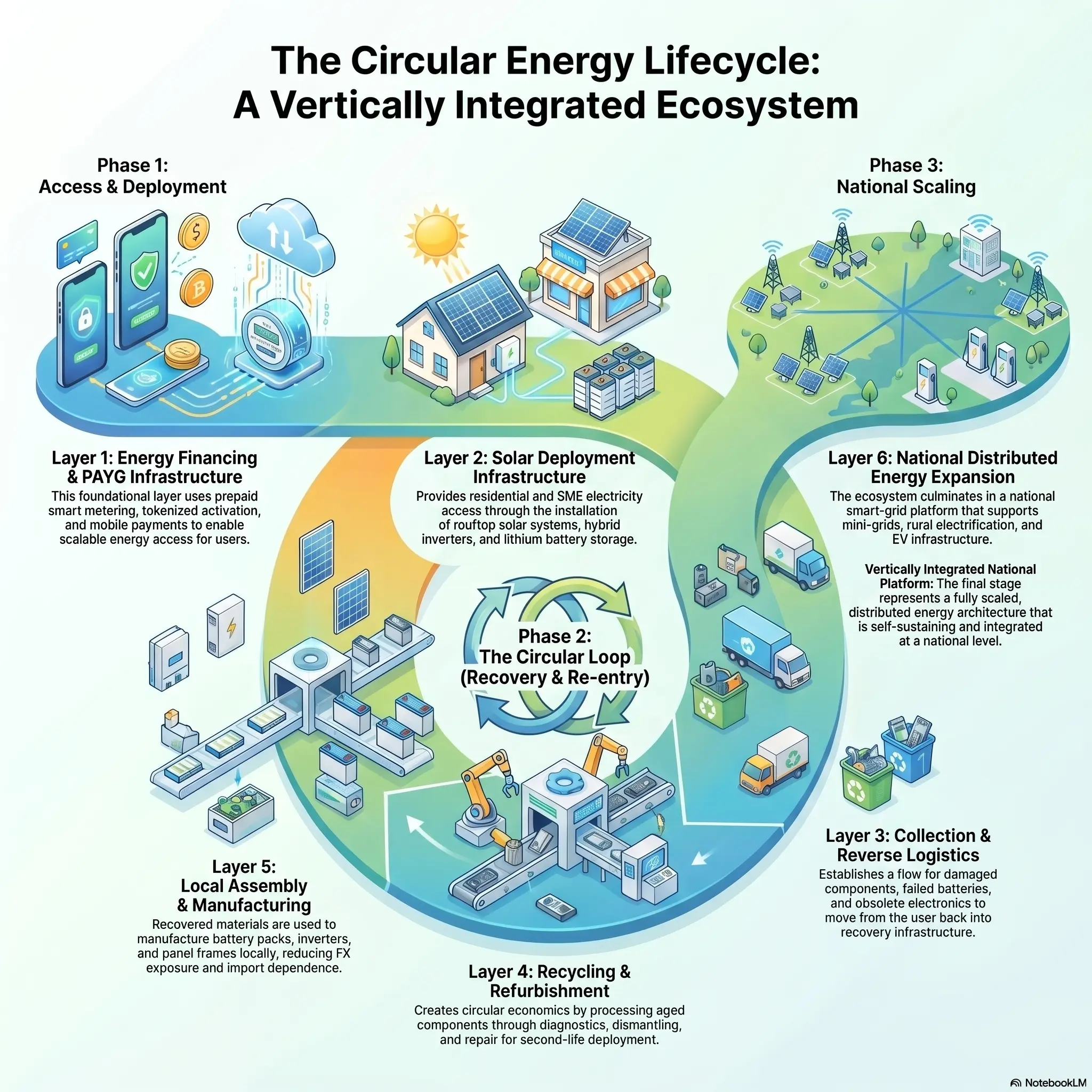
One that eventually combines:
At scale, this creates: